
Unity LevelPlay
Unity LevelPlay Android guide for Custom Adapter (GMA Next-Gen SDK).
Prerequisites
Performed by: Developer
- See the Compatibility Matrix for the minimum Android and compile SDK versions for this package.
- Initialize the GMA Next-Gen SDK before install. See Prerequisites.
Install the SDK
Performed by: Developer
Ensure your android/build.gradle (project-level) includes the required repositories:
allprojects {
    repositories {
        google()
        mavenCentral()
        maven { url 'https://jitpack.io' }
    }
}
Note: On Gradle 7+, use Gradle Setup (Gradle 7+) instead - declare repositories in settings.gradle under dependencyResolutionManagement and remove the allprojects block. Use one approach, not both.
Open the build.gradle (Module: app) file and add:
dependencies {
    implementation("io.github.tapmind-tech:customadapter-ironsource-nextgen:2.0.0")
    implementation("com.google.android.libraries.ads.mobile.sdk:ads-mobile-sdk:1.3.0")
}
Configure Unity LevelPlay
Performed by: Ad ops
Create the TapMind network: Monetize → Setup → SDK Networks → Available Networks → Manage Networks → select Custom Adapter → enter network key 15c11cb1d → Enter → Save. The network appears as TapMind.
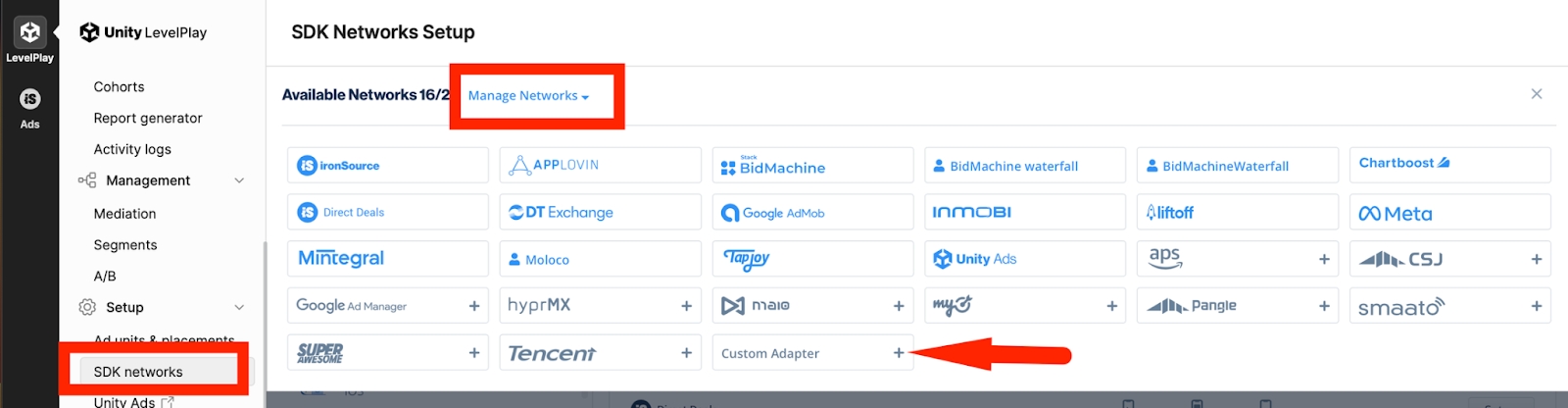
Set up instances: Setup → Instances → select TapMind Marketplace → Add ad instance → select ad type →
Instance name : provided by your account manager
placementCODE : provided by your account manager
Mediation Group: Select your target mediation group
Rate : provided by your account manager
Note: Enter the rate for each placement - it determines waterfall order. Add one instance per ad format to start.
Verify integration
Performed by: Developer
After install and dashboard configuration:
- Run your app in a debug build. TapMind's test mode is enabled automatically in debug builds and serves test ads at a high fill rate.
- Request an ad through your mediation SDK as you normally would.
- Confirm a TapMind ad fills. Check logs for the tag
TapMindAdapter. - When verified, build in release mode for production - test mode is disabled automatically in release builds, and live ads serve.
Note: Test mode is automatic. It follows your build type: debug = test ads, release = live ads. There is no flag to enable or disable, and nothing to turn off before going live.
Release build QA: There is currently no documented release-safe test path to validate R8/ProGuard without serving live ads. Consumer ProGuard rules from the TapMind AAR are applied automatically when you integrate the published adapter packages.
Troubleshooting
Performed by: Developer
Before diving into logs, confirm the LevelPlay network key against the Class & Network Key Registry, and placementName and eCPM/rate with your account manager.
See Troubleshooting for common symptoms, mediation-specific fixes, release vs debug guidance, and escalation steps. Partner-specific verification steps are under Verify integration above.
Note: Mediation dashboards may report higher request or attempt counts for TapMind's line than TapMind's backend actually receives. This is expected mediation-side counting behavior, not an integration issue, see Dashboard vs. backend count discrepancies in Troubleshooting for details.